






Key Points
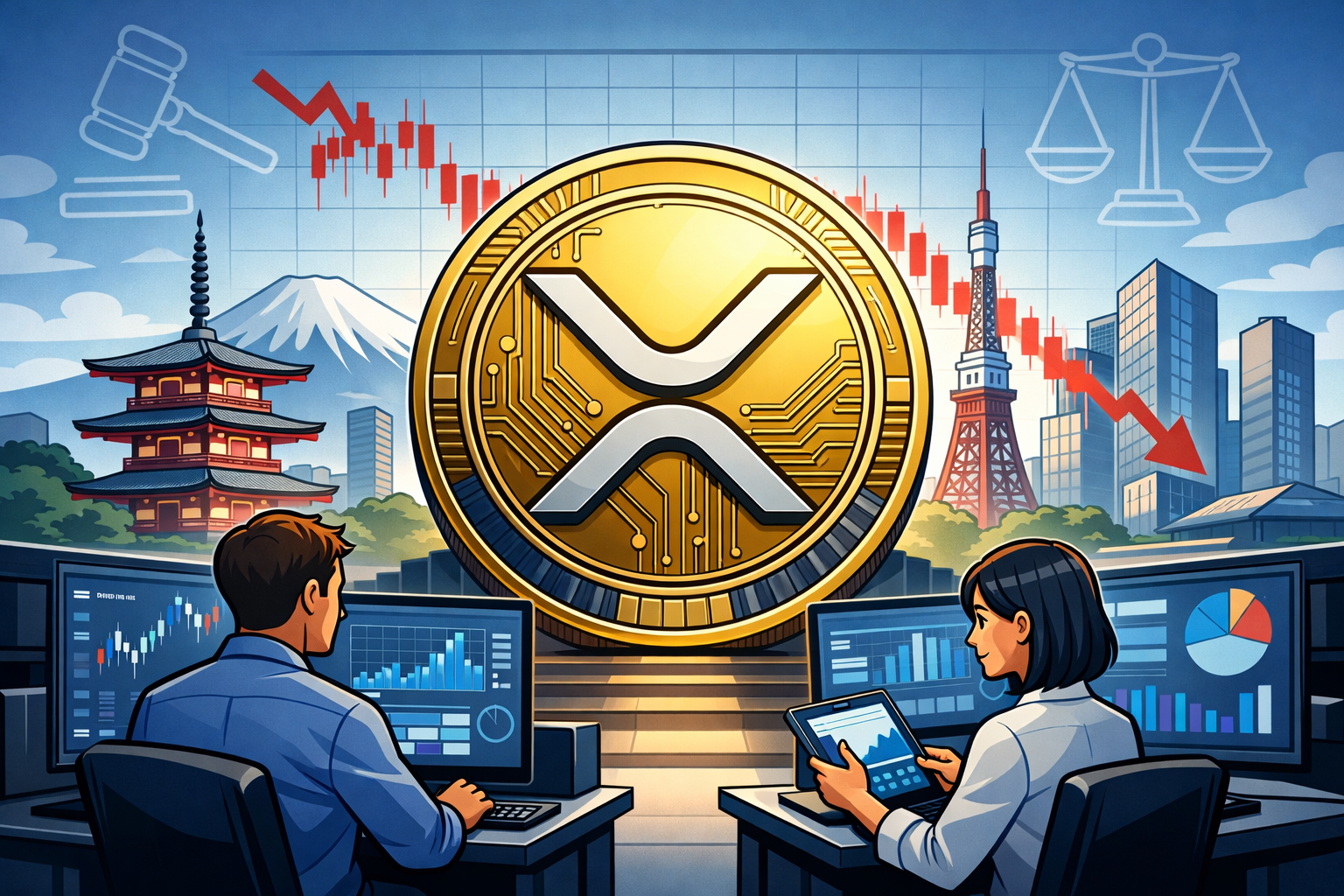
- XRP trades near multi-month lows despite renewed Japan-related bullish narratives.
- Most Japanese regulatory developments appear long established and likely priced in.
XRP has hovered near multi-month lows around $1.15, roughly 20% below the $1.50–$1.60 range where it previously faced resistance.
This price weakness persists even as social media revives claims that Japan’s institutional alignment with Ripple could trigger a sharp rally.
The narrative frequently highlights SBI Holdings’ integration with Ripple’s infrastructure, the Financial Services Agency’s classification of XRP as a digital asset, and draft amendments to Japan’s Financial Instruments and Exchange Act as fresh catalysts.
However, the central question is whether these elements represent new, unpriced information or simply a reframing of long-known developments.


Japan’s Regulatory Framework and XRP
Japan’s Financial Services Agency classified XRP under the Payment Services Act years ago, treating it as a crypto asset rather than a security.
SBI Holdings formed SBI Ripple Asia in 2016, and Japanese regional banks have explored Ripple-based payment solutions for nearly a decade.
These developments are documented and widely known, suggesting they have already been reflected in market pricing over previous cycles.
A recent draft amendment to the Financial Instruments and Exchange Act proposes insider-trading restrictions, issuer disclosures, and stricter penalties for violations.
This proposal would formalize and tighten oversight rather than introduce a new permissive regime for crypto assets.
Separate discussions about reducing Japan’s top crypto tax rate from 55% to 20% remain legislative proposals rather than enacted policy.
Reports of large JPY-denominated exchange inflows into XRP have circulated, but independent verification of methodology and scope remains limited.
Collectively, these factors indicate Japan remains a comparatively favorable jurisdiction for XRP, though not necessarily one introducing sudden structural change.
Potential Catalysts Beyond Japan
For XRP to experience a durable re-rating from current levels, developments would likely need to involve previously unpriced factors.
Examples include clearer U.S. regulatory outcomes enabling potential ETF pathways, measurable expansion in Ripple’s On-Demand Liquidity corridors, or new large-scale institutional allocations.
Japan’s ongoing parliamentary discussions, including banking subsidiaries potentially offering direct crypto trading services, could represent meaningful change if formally adopted.
At present, however, most widely circulated claims center on regulatory conditions and partnerships that have been in place for years rather than newly emerging catalysts.